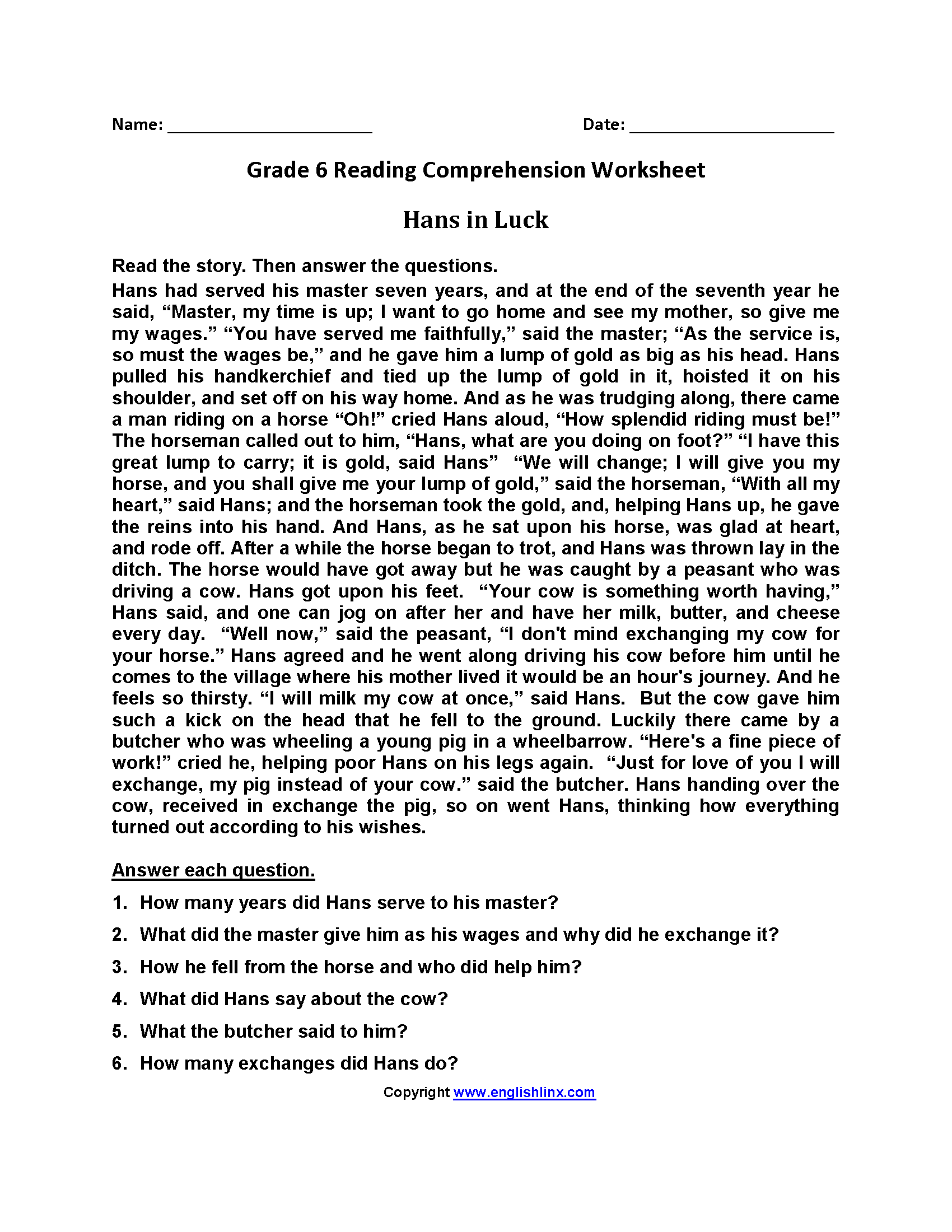
Reading comprehension is a crucial skill for 6th graders, as it lays the foundation for academic success in higher grades. At this stage, students are expected to analyze texts, understand themes, and answer questions that demonstrate their understanding. This article will explore effective strategies for enhancing reading comprehension in 6th grade, along with sample questions to assess students’ skills.
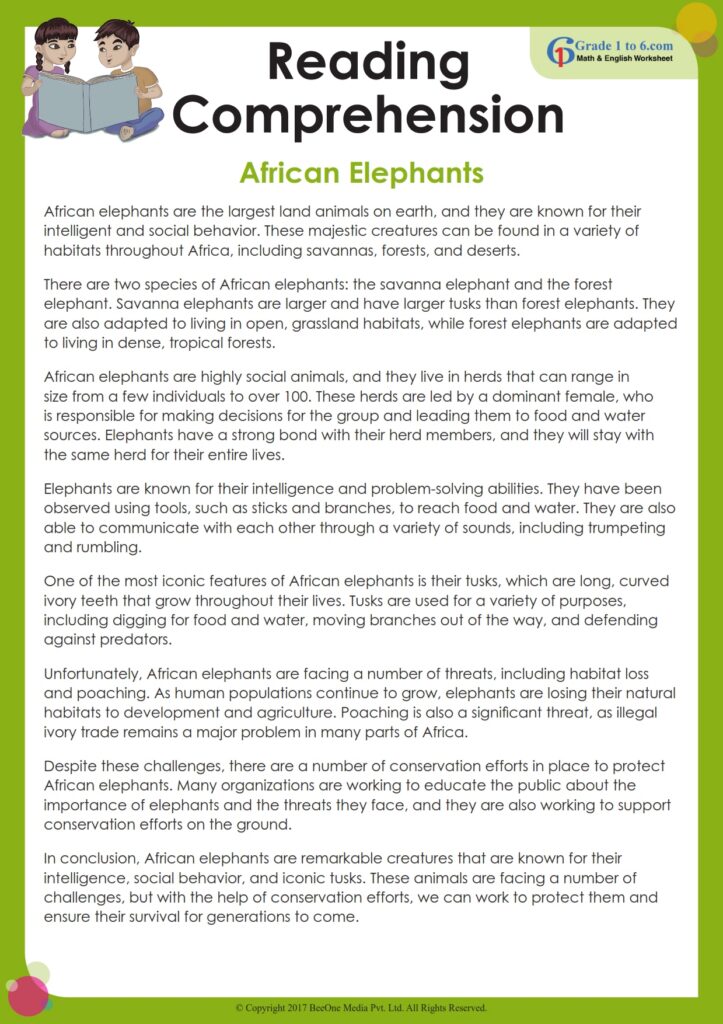
Reading Comprehension 6Th Grade With Questions
Understanding Reading Comprehension
Reading comprehension involves the ability to read a text, process its meaning, and respond to it thoughtfully. For 6th graders, this means not only recalling facts but also interpreting information and making connections to their own experiences. Engaging with diverse texts—fiction, non-fiction, poetry—can help students develop a well-rounded understanding of various subjects.
To improve reading comprehension, educators can encourage students to ask questions while reading. This practice promotes active engagement with the text and helps students clarify their thoughts. Additionally, discussing the material in groups can enhance understanding as students share different perspectives and insights.
Strategies for Improvement
One effective strategy for improving reading comprehension in 6th grade is the use of graphic organizers. These visual tools help students outline main ideas, supporting details, and relationships between concepts. By organizing information visually, students can better retain what they read and make connections between different parts of the text.
Another strategy is to incorporate regular reading practice with varied genres. This exposure not only builds vocabulary but also familiarizes students with different writing styles and structures. Teachers can assign specific texts followed by guided discussions or written reflections to deepen comprehension.
Sample Questions for Assessment
To assess reading comprehension effectively, teachers can use a variety of question types. Multiple-choice questions can test recall of specific details, while open-ended questions encourage deeper analysis and critical thinking. Here are some examples:
- What is the main idea of the passage?
- How does the author support their argument?
- What connections can you make between this text and your own experiences?
Incorporating these questions into assessments allows educators to gauge student understanding comprehensively. Regular practice with such questions can also prepare students for standardized tests that emphasize reading comprehension skills.
Download Reading Comprehension 6Th Grade With Questions
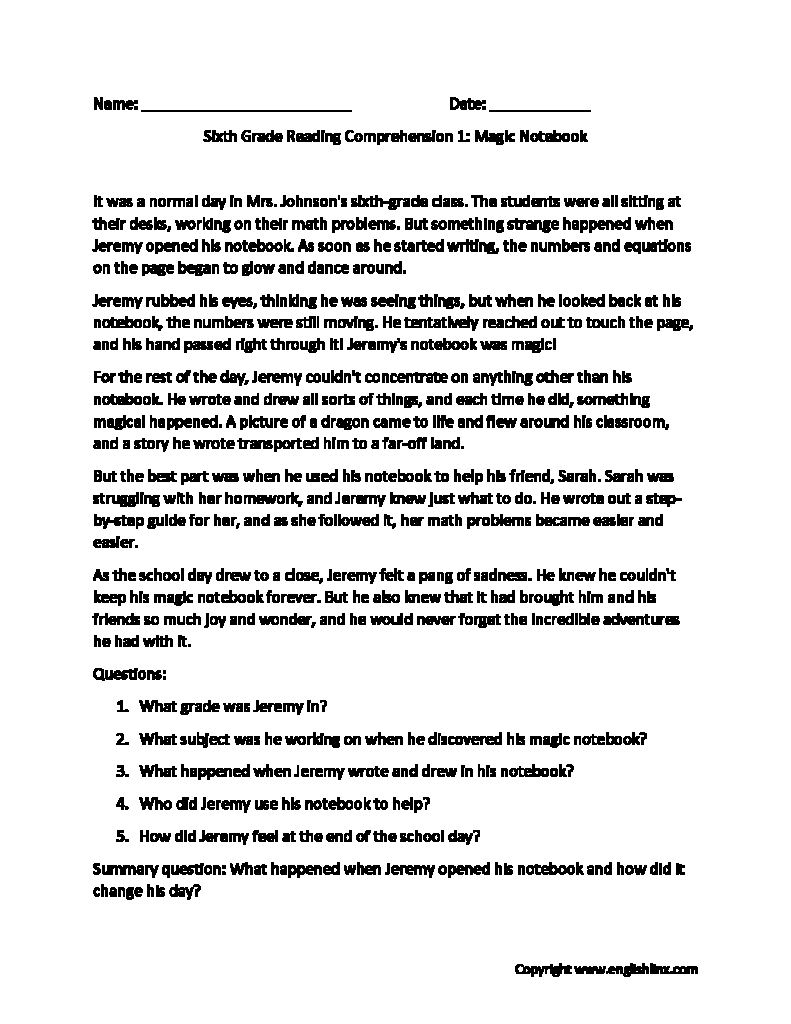
Sixth Grade Reading
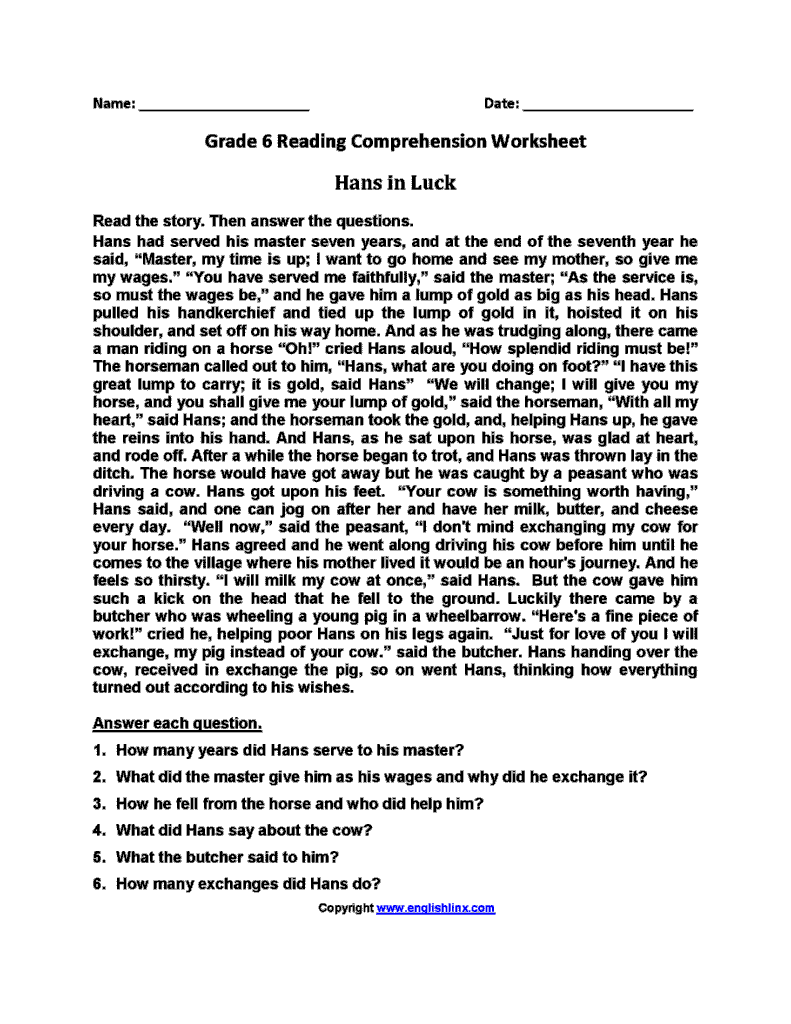
Sixth Grade Reading